
A fractional Chief Strategy Officer is a senior operator who works inside your company part of each week, owns the plan for the next one to three years, and builds the systems that carry that plan out. You get the attention of a strategy executive without the salary of one. In our practice the plan is tied to one question: what would a buyer, or a lender behind a buyer, pay for this company, and what has to change for the number to go up? This article walks through what the role does day to day, five places it changes a company, and how we run it.
Where the role sits in a small company
Most owner-operated companies between one and fifteen million in revenue have no one whose job is the next three years. The owner is busy running this week. The office manager keeps the books and the schedule. The operations lead keeps the trucks or the crews moving. Long-range work, such as how jobs are priced, who could run the company if the owner stepped back, and what a buyer would see in the files, gets done at night or not at all.
A fractional CSO takes that work off the owner's list and makes it someone's job. On our Advise track that means three things:
- Owning the roadmap. We write down where the company is, where it needs to be, and the gap list in between, and we report against that list every month.
- Running the cadence. A standing weekly session with the owner, and a quarterly reset of priorities so the plan does not drift.
- Building the systems. Written procedures, pricing tools, management screens and the documents a company runs on. We build them ourselves instead of handing the owner a list of software to go buy.
The last item is where our version of the role differs most from a typical consulting engagement, and we come back to it below.
Five places a fractional CSO changes a company
The examples below come from the work we do, most of it at Prime Sweeping, an overnight parking-lot sweeping and day porter company in metro Atlanta where I am a partner and serve as CSO. Each one starts with something that lived in one person's head and ends with something written down that the company can run on.
1. Pricing that comes from measured time
Many service companies price by feel: the owner looks at a site, remembers a similar one, and names a number. It works until the owner is not the one quoting. At Prime we built a pricing model from the company's job records, measuring how long crews actually spend on each property and how long they spend driving between them. A salesperson now enters what they can see on a site, such as its size, how many islands and sidewalks it has and how often it is serviced, and the tool prices it the way the owner would. Our article on pricing field service work from measured time goes through the method.
2. Scheduling that does not depend on one person
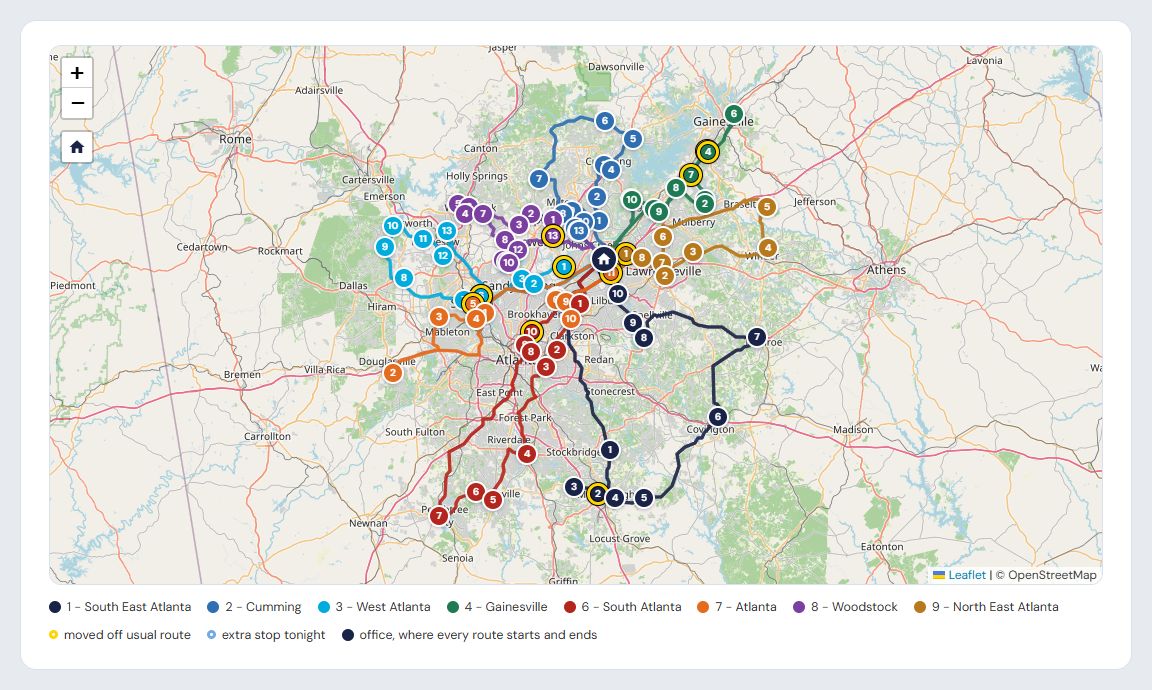
Every route-based company has the person who knows which stops go together and what to do when a driver calls out. That knowledge is valuable and it is a risk, because a buyer cannot buy it. We built Prime a route balancer that takes the night, the drivers who are out and the stops that have to be serviced, and rebuilds the routes inside the shift limits in one step. The person who used to do it in their head still checks the result. They no longer have to be the one who produces it.
3. A weekly management rhythm with a record
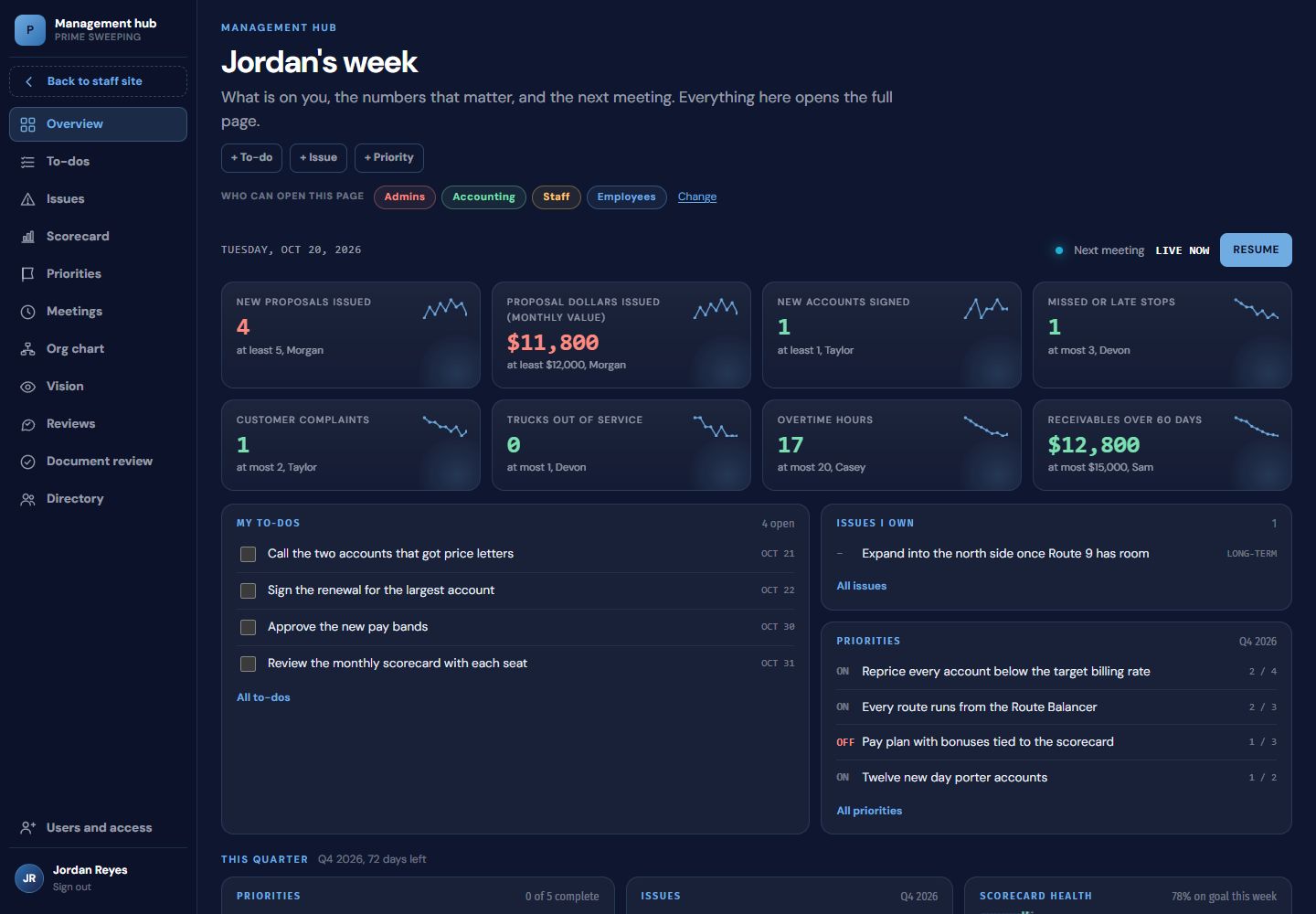
Owners often run the company through conversations. Decisions get made, and three months later nobody can say when or why. We set up a management hub with a weekly scorecard, quarterly priorities, an issues list, to-dos and a structured weekly meeting, all with one owner per item and a date. After a quarter the company has a written history of how it is run, which is exactly what a buyer asks to see in diligence. The weekly leadership meeting article covers the meeting itself.
4. Procedures and HR that are written down
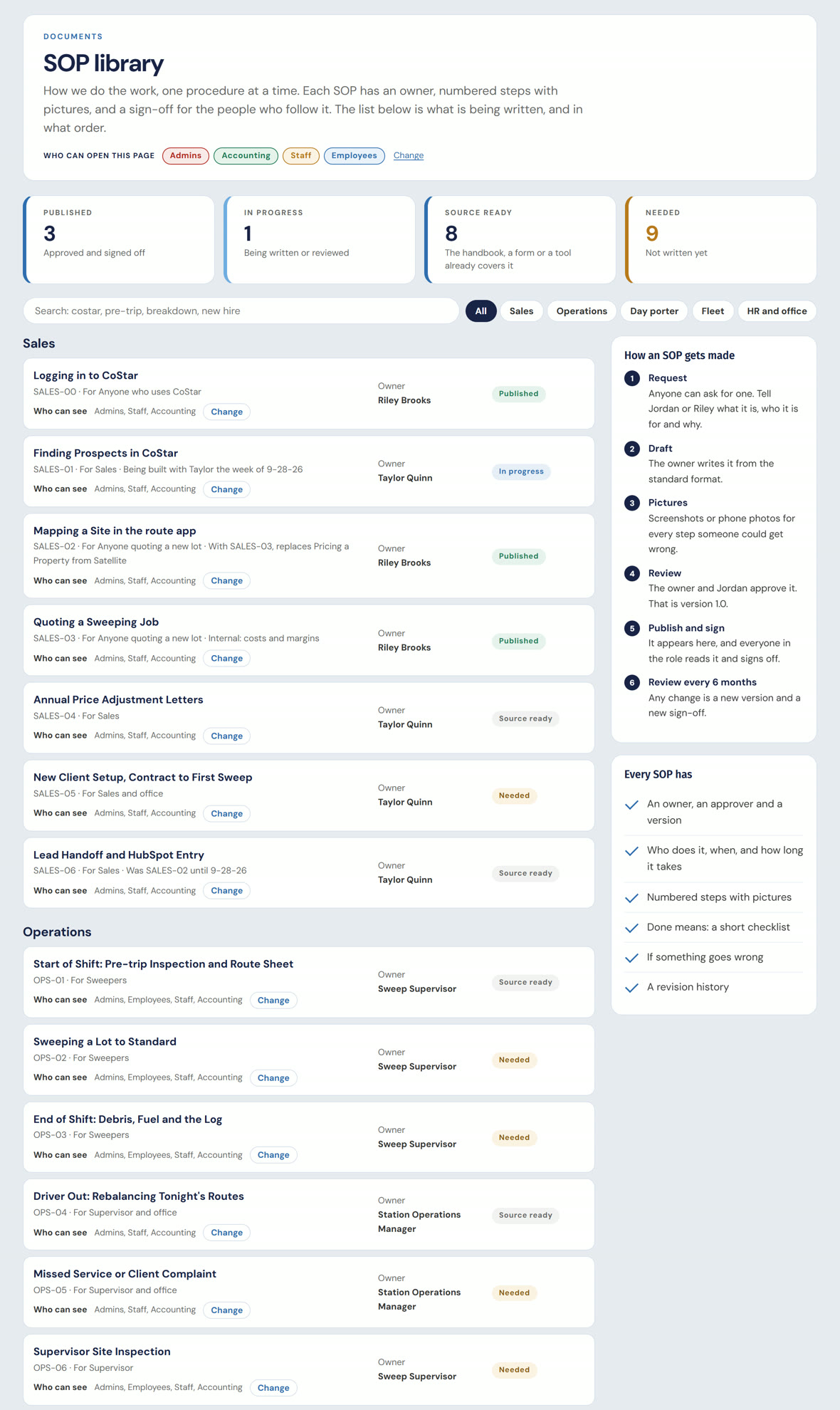
A company that trains new people by having them ride along with the owner is a company that cannot grow past the owner's calendar. We write the procedures a new hire actually needs, with screenshots and the reasons behind each step, and keep them in one searchable library. At Prime that meant twenty procedures across five departments and thirteen HR forms that match the employee handbook.
5. Sales material that does not need the owner in the room
If the only person who can explain why the company is worth hiring is the owner, sales stops when the owner is busy. We build the brand rules, the client-facing packets, the standard terms and the price adjustment letters, so a salesperson or an office manager can send a complete, consistent package without asking anyone.
The software is part of the job
Most of the tools above already exist in some form as commercial software, and plenty of owners have tried them. The common result is a set of subscriptions that each solve part of the problem, built for an average company, with the owner's knowledge still sitting outside all of them.
We build one private website for the company instead, behind one sign-in. Route planning, prospecting, quoting, the management hub, written procedures, HR forms and the company's documents live in the same place, and each screen is shaped around how that company actually works. Because we build it, it changes when the company changes. When Prime adjusted how it fits new properties between existing ones, the prospect locator was updated the same week.
There is a second reason we build. A buyer's diligence team will ask how the company quotes, schedules and manages its people. A company that can open one site and show them is answering the question with evidence. What We Built walks through every screen of the Prime site, with sample data in place of the company's real figures.
Why we are built for this role
There are good fractional executives in Atlanta, and an owner should talk to more than one. Here is what is specific to us, stated so you can check it:
- We are business brokers. We value companies, write offering memoranda and sit across from buyers and SBA lenders. Every item on the gap list is chosen because it moves something a buyer pays for: the company running without the owner, recurring or contracted revenue, no customer over 20 percent of revenue, and clean, reviewed financials.
- We build the systems ourselves. The tools in this article were designed and built by our team. Nobody is reselling a platform.
- We have done it in a company we own part of. At Prime we started as an advisor on pricing and sales and became a partner. Our own money rides on whether the work holds up.
- The fees line up with the outcome. If you later sell with us, the advisory fees you paid are credited against the closing fee, up to half of that fee.
I hold an MBA and a PMP, and the project discipline shows up in how the roadmap is run: written scope, owners and dates, and a monthly report you can hold us to.
How an engagement runs
Every engagement starts with an Exit Roadmap: where the number is today, which value drivers move it, and the gap list that follows. From there the owner picks one of three levels, each defined by what changes for them. At the Advisory Board level, the owner runs the plan and we keep it honest. At the Fractional CSO level, we own the roadmap and report monthly. At the Embedded level, we hold the CSO title and a board seat and work hands on in the company every week.
The commitment is a three-month minimum to start, then six-month terms. That is long enough to finish real work and short enough that no owner is locked into something that is not paying off. Pricing is set in the engagement letter. The full model, including how the Partner track works, is in our article on working with a broker before you sell.
When it is the wrong fit
A fractional CSO is not the answer for every company. If the business is ready to sell in the next six months, the time is better spent on a clean listing. If the owner is not willing to let decisions move out of their head and onto paper, no amount of software will change that. And if the company's problem is a single urgent one, such as a cash crunch or a lost customer, it needs a direct fix before it needs a three-year plan. We will say so in the first conversation if that is where you are.
Start with an hour on the numbers
The first step is a working session on your Exit Roadmap, about an hour and at no charge. We look at where the number sits today and which two or three changes would move it the most. You can book a time here, or read more about the practice on the consulting page.